
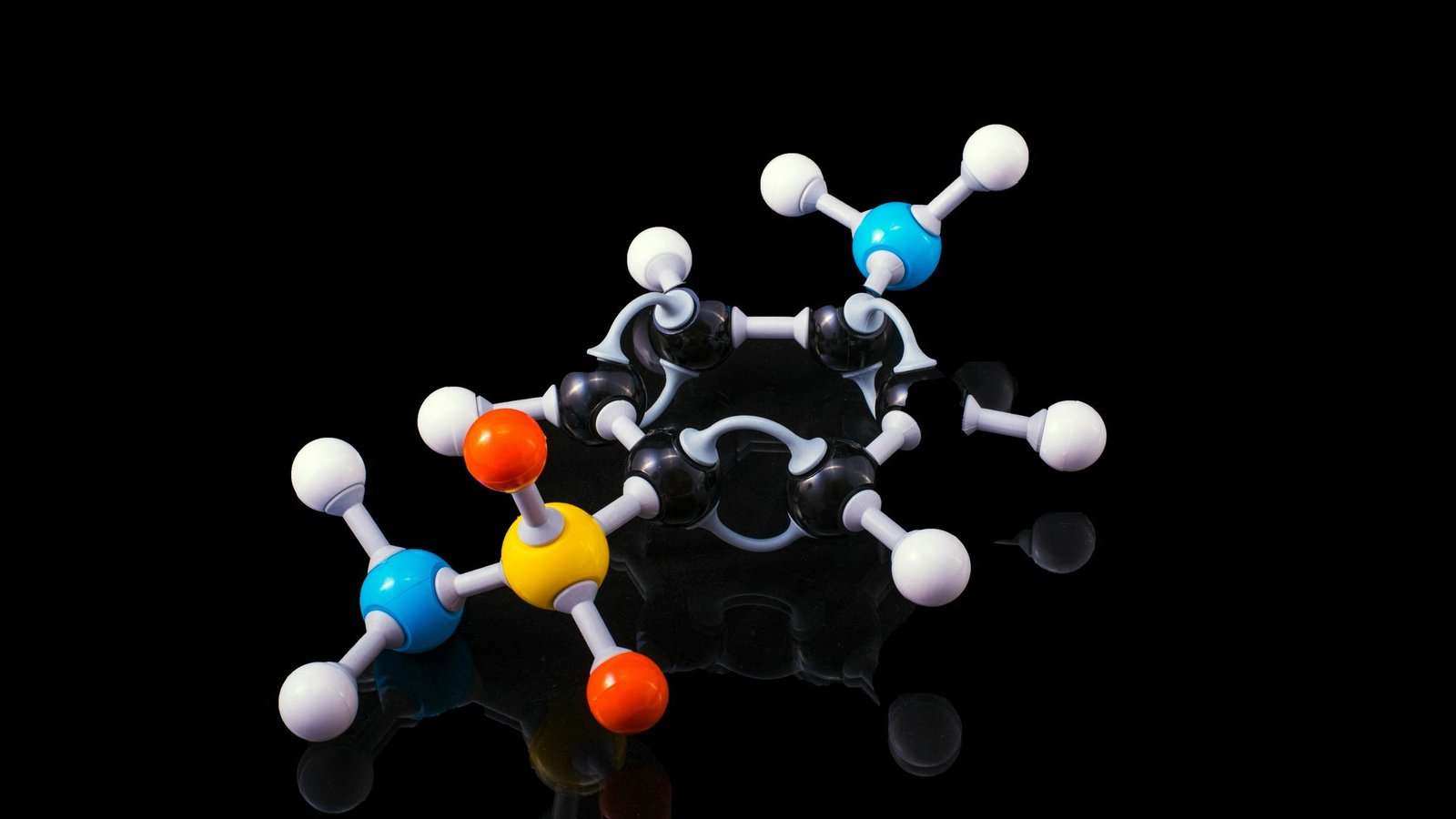
From a protein listto a mechanism.
Docking, virtual screening and GROMACS molecular dynamics that start from your omics result and end with a ranked, testable hypothesis.
Docking
Molecular docking and virtual screening
Where and how well a ligand binds, ranked with the caveats stated.
Protein-ligand docking
Receptor and ligand preparation, binding-site definition, pose generation and scoring with AutoDock Vina and related tools; interaction maps for the top poses.
Background and references
AutoDock Vina (Trott and Olson, 2010) is the most widely used open docking engine, and its poses are only a starting point: we re-score, inspect and map the interactions of the top poses, and say how reliable each one is.
- Trott O, Olson AJ (2010). AutoDock Vina: improving the speed and accuracy of docking with a new scoring function, efficient optimization, and multithreading. J Comput Chem 31:455-461. PubMed · DOI · Free full text
Virtual screening
Docking of compound libraries (natural products, approved drugs, custom sets) with filtering by drug-likeness and ADMET predictions.
Background and references
Docking of ultra-large libraries can surface new chemotypes when it is followed by careful filtering and inspection (Lyu et al., 2019). Drug-likeness and pharmacokinetic filters are applied with SwissADME (Daina et al., 2017) before anything is proposed for the bench.
- Lyu J et al. (2019). Ultra-large library docking for discovering new chemotypes. Nature 566:224-229. PubMed · DOI · Free full text
- Daina A, Michielin O, Zoete V (2017). SwissADME: a free web tool to evaluate pharmacokinetics, drug-likeness and medicinal chemistry friendliness of small molecules. Sci Rep 7:42717. PubMed · DOI · Free full text
Protein-protein and peptide docking
Interface prediction and docking of protein complexes and peptides, with hotspot analysis.
Background and references
HDOCK combines template-based and ab initio docking of protein complexes (Yan et al., 2020). We cluster the solutions, analyse the interface and report hotspot residues worth mutating.
Binding-site and pocket analysis
Pocket detection, druggability assessment and comparison across homologues or mutants.
Background and references
Fpocket detects pockets geometrically and scores their druggability (Le Guilloux et al., 2009). We compare pockets across homologues and mutants so that selectivity questions are answered before docking starts.
- Le Guilloux V, Schmidtke P, Tuffery P (2009). Fpocket: an open source platform for ligand pocket detection. BMC Bioinformatics 10:168. PubMed · DOI · Free full text
Simulation
Molecular dynamics simulation
How a system behaves over time, not just in one snapshot.
All-atom MD in GROMACS
Proteins, complexes, nucleic acids and membrane systems; system building, solvation, equilibration and production runs of tens to hundreds of nanoseconds.
Background and references
GROMACS (Van Der Spoel et al., 2005) runs all-atom simulations of proteins, complexes, nucleic acids and membranes efficiently on GPUs; Hollingsworth and Dror (2018) give a clear account of what such simulations can and cannot tell you. We build, equilibrate and run the system and report convergence.
- Van Der Spoel D et al. (2005). GROMACS: fast, flexible, and free. J Comput Chem 26:1701-1718. PubMed · DOI
- Hollingsworth SA, Dror RO (2018). Molecular Dynamics Simulation for All. Neuron 99:1129-1143. PubMed · DOI · Free full text
Stability and flexibility analysis
RMSD, RMSF, radius of gyration, hydrogen bonds, secondary structure and clustering over the trajectory.
Background and references
RMSD, RMSF, radius of gyration, hydrogen bonds and secondary structure are computed over the trajectory and interpreted against the sampling achieved, following the cautions of Hollingsworth and Dror (2018). Replicate runs are standard.
- Hollingsworth SA, Dror RO (2018). Molecular Dynamics Simulation for All. Neuron 99:1129-1143. PubMed · DOI · Free full text
Binding free-energy estimates
MM/PBSA and MM/GBSA on docked or crystal complexes; umbrella sampling and alchemical methods on request.
Background and references
MM/PBSA and MM/GBSA give relative binding-energy estimates quickly but with known limits (Genheden and Ryde, 2015); gmx_MMPBSA brings them to GROMACS trajectories (Valdés-Tresanco et al., 2021). We state the uncertainty and offer alchemical methods where precision matters.
- Genheden S, Ryde U (2015). The MM/PBSA and MM/GBSA methods to estimate ligand-binding affinities. Expert Opin Drug Discov 10:449-461. PubMed · DOI · Free full text
- Valdés-Tresanco MS et al. (2021). gmx_MMPBSA: A New Tool to Perform End-State Free Energy Calculations with GROMACS. J Chem Theory Comput 17:6281-6291. PubMed · DOI
Mutation and modification effects
Effects of point mutations, phosphorylation and other PTMs on structure and interactions, framed by your proteomics data.
Background and references
Phosphorylation and other PTMs change charge, conformation and interactions, and these effects can be modelled in silico (Audagnotto and Dal Peraro, 2017). We start from the sites your phosphoproteomics data flagged.
- Audagnotto M, Dal Peraro M (2017). Protein post-translational modifications: In silico prediction tools and molecular modeling. Comput Struct Biotechnol J 15:307-319. PubMed · DOI · Free full text
Structure
Structure preparation and modelling
A simulation is only as good as its starting structure.
Structure prediction and homology modelling
AlphaFold models and template-based modelling where no experimental structure exists, with quality assessment.
Background and references
AlphaFold predicts protein structures with accuracy approaching experiment for most domains (Jumper et al., 2021), and AlphaFold 3 extends this to complexes with ligands and nucleic acids (Abramson et al., 2024). We report pLDDT and PAE so you know which parts of a model to trust.
- Jumper J et al. (2021). Highly accurate protein structure prediction with AlphaFold. Nature 596:583-589. PubMed · DOI · Free full text
- Abramson J et al. (2024). Accurate structure prediction of biomolecular interactions with AlphaFold 3. Nature 630:493-500. PubMed · DOI · Free full text
Ligand parameterisation
Force-field parameters for small molecules, cofactors and modified residues.
Background and references
Small molecules, cofactors and modified residues are parameterised with GAFF (Wang et al., 2004) or CGenFF (Vanommeslaeghe et al., 2010) to match the protein force field, with partial charges derived and checked for each ligand.
- Wang J et al. (2004). Development and testing of a general amber force field. J Comput Chem 25:1157-1174. PubMed · DOI
- Vanommeslaeghe K et al. (2010). CHARMM general force field: A force field for drug-like molecules compatible with the CHARMM all-atom additive biological force fields. J Comput Chem 31:671-690. PubMed · DOI · Free full text
Protonation and system setup
pKa-based protonation states, ions, solvent and membrane composition set for the biological context.
Background and references
Protonation states are assigned from predicted pKa values with PROPKA3 (Olsson et al., 2011) and PDB2PQR (Jurrus et al., 2018), then ions, solvent and, where needed, membrane composition are set for the biological context.
- Olsson MH et al. (2011). PROPKA3: Consistent Treatment of Internal and Surface Residues in Empirical pKa Predictions. J Chem Theory Comput 7:525-537. PubMed · DOI
- Jurrus E et al. (2018). Improvements to the APBS biomolecular solvation software suite. Protein Sci 27:112-128. PubMed · DOI · Free full text
Omics link
Linked to your omics data
Targets usually come from a measurement, not a database search.
Targets from proteomics and phosphoproteomics
Proteins or phosphosites that changed in your dataset become the structural question.
Background and references
Most phosphosites have no known function (Needham et al., 2019; Ochoa et al., 2019). Structural modelling of a regulated site or protein turns a list entry into a mechanistic hypothesis that can be tested.
- Needham EJ et al. (2019). Illuminating the dark phosphoproteome. Sci Signal 12:eaau8645. PubMed · DOI
- Ochoa et al. (2019). The functional landscape of the human phosphoproteome. Nat Biotechnol. PubMed · DOI · Free full text
Hypotheses for the bench
Reports rank what is worth testing experimentally and say how confident the prediction is.
Background and references
Simulations are most useful when they produce a ranked, testable prediction with a stated confidence (Hollingsworth and Dror, 2018). Our reports end with what to test first and why.
- Hollingsworth SA, Dror RO (2018). Molecular Dynamics Simulation for All. Neuron 99:1129-1143. PubMed · DOI · Free full text
Choosing
Docking or molecular dynamics?
| Docking | Molecular dynamics | |
|---|---|---|
| Question | Where and roughly how well does it bind? | Is the pose stable, and how does the system move? |
| Time scale | Minutes per ligand | Days per system |
| Output | Poses, scores, interaction maps | Trajectories, stability metrics, free-energy estimates |
| Best for | Screening many ligands, first hypotheses | Validating a few candidates, mechanism, mutations and PTMs |
| Usual sequence | Run first | Run on the docking winners |
How a project runs
From samples to answers.
- 01
Define
Target, ligands or partners and the question agreed; structures sourced or modelled.
- 02
Prepare
Protonation, parameters, binding site and system set-up documented.
- 03
Compute
Docking, screening or MD production runs on our own compute.
- 04
Interpret
Analysis, figures and a report that ranks hypotheses and states their confidence.
What to send
Sample requirements.
| Sample | Amount | Notes |
|---|---|---|
| Target | PDB ID, UniProt ID or sequence | Tell us about known ligands or mutations |
| Ligands | SMILES, SDF or library name | Or let us build the library |
| Omics result | Protein or site list with fold changes | We pick targets with you |
Guide values; we confirm amounts for your sample type before shipping. See the sample submission guide.
What you get
Deliverables.
- Prepared structures and input files
- Docking poses, scores and interaction diagrams, or MD trajectories and analysis plots
- Free-energy estimates where requested
- Report with methods, parameters, software versions and ranked hypotheses
Questions we are asked most.
They are hypotheses for experimental follow-up. We report scores with their known limitations and recommend what to test, not what to believe.
Yes. Phosphorylated residues and other PTMs are parameterised and the effect on structure and interactions compared with the unmodified form.
Docking and screening studies are typically delivered in one to two weeks; MD projects in two to six weeks depending on system size and simulation length.
No. Where none exists we use AlphaFold or homology models and report their quality.
One laboratory, six ways in.
Most projects combine two of these. The same scientists scope, run and analyse all of them, so a proteomics study can pick up metabolomics, sequencing or a structural question without changing provider.


Have a target you want to understand structurally?
Send the protein, the ligands or partners and the question. We reply with an approach, a timeline and a quotation.