
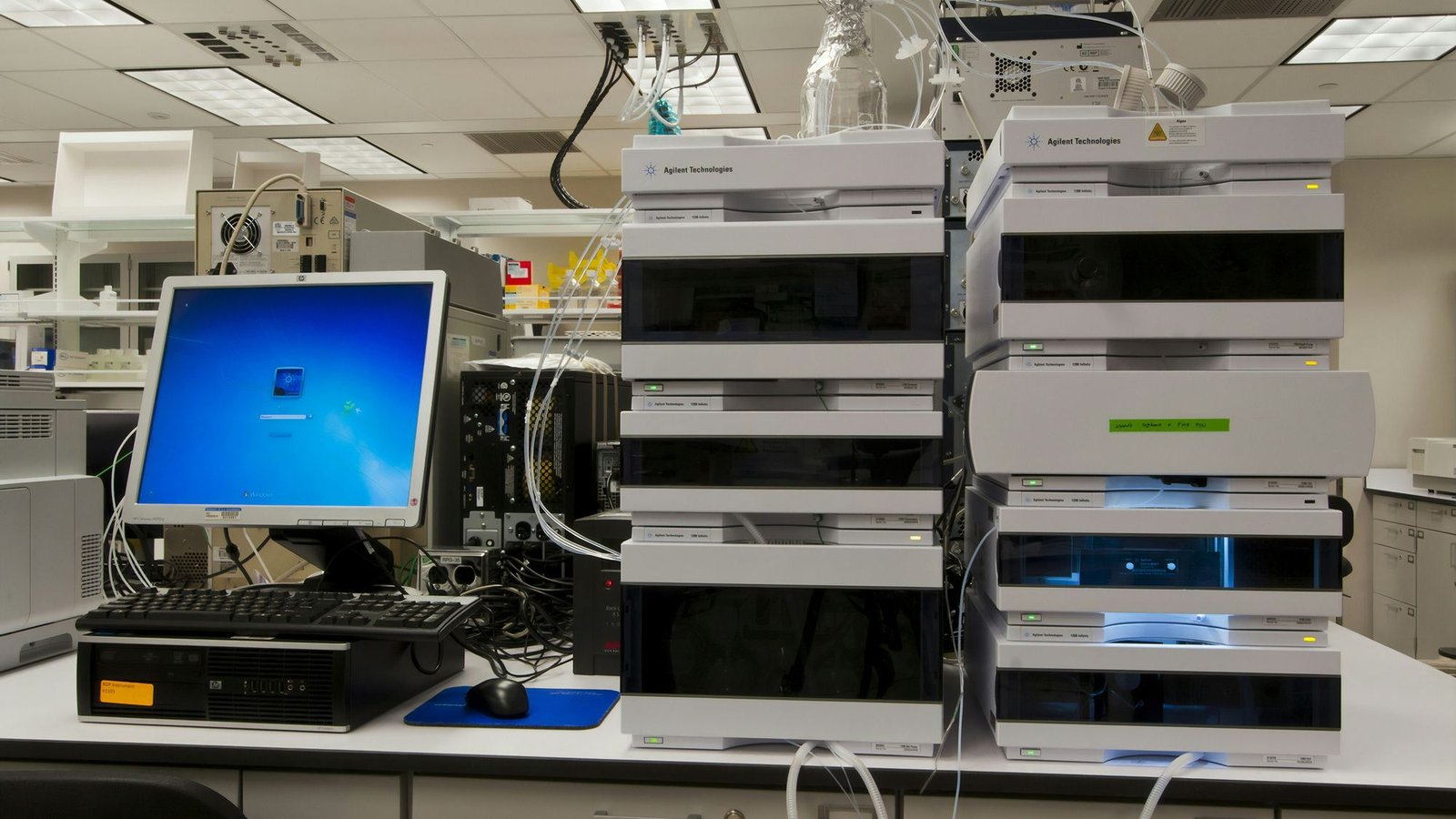
What determines the cost of a proteomics project in India?
No price list can answer this honestly. Here is what actually drives the cost of an LC-MS/MS study, so you can scope a project before you ask for a quotation.
Why there is no list price
Two studies with the same number of samples can differ five-fold in cost. One is a label-free cell-line comparison with three replicates per group; the other is a plasma cohort that needs enrichment, fractionation, a spectral library and a statistician. A single rate per sample would overcharge the first and under-deliver on the second. The useful question is not “what does a sample cost” but “which of the cost drivers below does my study need”.
The six drivers
| Driver | What it changes | Typical effect on cost |
|---|---|---|
| Number of samples | Instrument time, consumables, analysis effort | Largest single factor; per-sample cost falls as n rises |
| Depth required | Gradient length, fractionation, instrument platform | Fractionated or long-gradient runs multiply instrument hours |
| Acquisition strategy | DDA vs DIA vs TMT; library generation | TMT adds reagent cost; DIA may need a library run |
| Sample type | Preparation complexity, enrichment, QC | Plasma, FFPE and phospho add preparation steps |
| Analysis scope | Standard statistics vs custom modelling, integration, figures | Interpretation and custom code add scientist time |
| Turnaround | Scheduling priority | Rush timelines carry a premium |
What a typical scope looks like
A discovery study is most often 3 to 6 replicates per group, two to four groups, label-free DIA on a single-shot gradient, with differential abundance and enrichment analysis included. Cohort studies in plasma usually add nanoparticle enrichment or depletion and a sample-specific library. Phosphoproteomics adds enrichment, higher protein input and, for confident site localisation, a longer gradient or FAIMS. Each of these is a line item, and each can be removed if the question does not need it.
How to keep cost down without weakening the study
- Decide the comparison before the sample count. Replicates buy statistical power; extra conditions buy breadth. Most underpowered studies have too many conditions and too few replicates.
- Pool a pilot. Running two or three samples first tells you the depth you will get and whether enrichment is needed, before the cohort is committed.
- Match acquisition to the design: DIA for cohorts, TMT for multi-condition designs with few missing values, DDA for library building and PTM discovery.
- Ask for the analysis you will use. A full multi-omics integration is wasted on a two-group comparison; a two-group comparison with reproducible code is not.
- Budget it into the grant correctly. Indian funding agencies accept outsourced analytical services as consumables or contractual services; a written quotation at proposal stage avoids a shortfall later.
What a quotation from us contains
Sample requirements, the preparation and acquisition plan, the instrument platform, the analysis deliverables, the timeline and the total cost, in writing, before any sample is shipped. The experimental design consultation that produces it is free and does not oblige you to proceed.
Written by the omicslink proteomics team. Reviewed November 2026.
Request a scoped quotation